Update Fishbowl: Difference between revisions
| Line 13: | Line 13: | ||
==Auto update== | ==Auto update== | ||
'''Note:''' Fishbowl Advanced has supported MySQL 5.7 for many years. With the release of Fishbowl Advanced 2023.11, Fishbowl now also supports the MySQL 8 series. | |||
* If you run the [[Getting_Started#2._Install_Fishbowl|Fishbowl Installer]], you will need to select location where MySQL 8 is installed. Instructions for installing MySQL 8 can be found [[Getting_Started#1._Install_MySQL|here]]. | |||
* If you run the Fishbowl Installer, you will need to select | * If you use the auto update, Fishbowl will continue to use your existing MySQL 5.7 installation.''' | ||
* If you use the auto update, Fishbowl will continue to use your existing MySQL 5.7 installation. | |||
With the auto update, there is no need to run an installer, and in most cases, only a few small files will be downloaded to complete the update. [[Plugin#Update_plugins|Plugins are automatically updated]] when Fishbowl is updated to the latest version. | With the auto update, there is no need to run an installer, and in most cases, only a few small files will be downloaded to complete the update. [[Plugin#Update_plugins|Plugins are automatically updated]] when Fishbowl is updated to the latest version. | ||
Revision as of 09:35, 26 October 2023
Updated versions of Fishbowl are typically released once a month, and they include new features and improvements. It only requires a few minutes to update Fishbowl and take advantage of the latest changes. Fishbowl also has the ability to push critical updates and patches in the middle of a release cycle. In this case, you will see an update window when starting the Fishbowl Server.
- Most major updates require a current support contract with Fishbowl.
- In most cases, backup files are not needed, but it is still highly recommended to copy critical files to the desktop or another safe location.
- Follow the steps to create a backup of the MySQL database.
- Browse to C:\Program Files\Fishbowl\data\backups and copy the most recent backup file to the desktop.
- Copy C:\Program Files\Fishbowl\plugins to the desktop.
- Copy C:\Program Files\Fishbowl\database\images to the desktop.
- Copy C:\Program Files\Fishbowl\server\reports to the desktop.
- The auto-update settings can be customized in the Fishbowl Server Administration by right-clicking the Fishbowl Server tray icon and selecting Options.
File:Auto update settings.png
Auto update
Note: Fishbowl Advanced has supported MySQL 5.7 for many years. With the release of Fishbowl Advanced 2023.11, Fishbowl now also supports the MySQL 8 series.
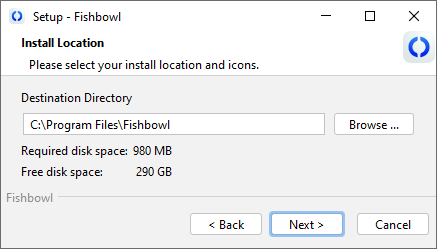
- If you run the Fishbowl Installer, you will need to select location where MySQL 8 is installed. Instructions for installing MySQL 8 can be found here.
- If you use the auto update, Fishbowl will continue to use your existing MySQL 5.7 installation.
With the auto update, there is no need to run an installer, and in most cases, only a few small files will be downloaded to complete the update. Plugins are automatically updated when Fishbowl is updated to the latest version.
- Fishbowl will display a notification in the client when an update is available. Click Start Server Download to download the update.

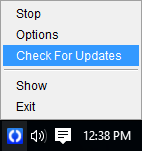
- Alternatively, right-click the Fishbowl Server tray icon, select Check For Updates, and then click Update Fishbowl.
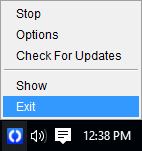
- Restart the server by right-clicking the Fishbowl Server tray icon and selecting Exit.
- Start the Fishbowl Server from the desktop or the list of programs.

- When the server restarts, click Yes to apply the updates.

- Click OK to start the database update.
File:Database update.png - All client computers will update automatically when connecting to the updated Fishbowl Server.
- If the auto update fails, follow the instructions here to manually download and install Fishbowl into the same directory where Fishbowl is currently installed.